
For twenty years, destination marketing rested on a quiet agreement. You published something useful, the ten best hikes, the perfect three-day itinerary, the truth about when to visit, and in return the search engines sent you travelers. Some of them stayed. Some of them booked. The deal held for so long that most of us stopped noticing it was a deal at all.
That agreement is now breaking. It's worth understanding calmly, because a lot of the noise around it is unhelpful.
What's actually changing
Artificial intelligence has learned to answer the traveler's question without sending the traveler anywhere. Ask when to visit the Florida Keys, or what to do with three days in Utah, and increasingly the answer arrives right there on the results page: assembled, summarized, complete. No click. No visit to the beautifully written page that supplied that answer in the first place.
The numbers are not subtle. Across many sectors, organic web traffic has fallen an estimated 15 to 25 percent as AI-generated answers have scaled. Google's AI Overviews now appear on roughly half of all searches. And travel has been hit harder than most, losing something in the region of 20 percent of its search referral traffic year on year.
There's a specific reason travel takes the heavier blow, and every destination marketer should sit with it for a moment. The questions that built the travel web are informational. Where should I go, what's it like, when should I visit, what shouldn't I miss. Those questions are the bread and butter of every destination website ever made, and they are exactly the questions AI is best at answering. Your carefully crafted "top ten things to do" page was written to catch a searcher. Now it is more often the raw material a machine uses to answer that searcher directly, and keep them.
The instinct is to ask how we get featured inside the AI answer, how we rank in the summary, win the citation, optimize for the machine. It's a fair question. But it may be the wrong one to start with, because it misunderstands where the real value was in the first place.
Travelers research with their brain. They choose with their heart.
AI is winning the research stage of travel. It's becoming extraordinarily good at telling you where to kayak with whales, which rainforest to walk through, the best place to stand under the northern lights. Let it. Those logistics were never your competitive advantage, because the research stage was never where the decision got made.
People research with their brain. But they choose with their heart. Nobody books a trip because a summary told them it was efficient. They book because something made them feel it, because for a moment they were already there. That feeling cannot be summarized, because it isn't information. It has to be carried to them by someone who was actually there.
Consider the difference:
- Not where to kayak with whales, but what it feels like when one breaches fifteen feet from your kayak. The water trembling beneath you. The fear and the exhilaration. Then the strange, quiet recognition of the sentience in its eye.
- Not what to do in Australia's Daintree Rainforest, but an Aboriginal guide telling you, in his own voice, what the forest means to his people, how he grew up woven into it, how he will show it to you through his eyes.
- Not the best place to see the aurora, but the world's foremost expert on the northern lights explaining why, after a thousand nights beneath them, he still can't stop chasing the next.
A machine will give you the first half of each of those. It will never give you the second. That space between the fact and the feeling is the whole of it. And the more the world automates the brainwork of travel, the more valuable the heart work becomes.
The part worth owning
If the deciding factor is emotional connection, real human storytelling told in a voice and at length, then that is the thing to build your marketing around, and the thing to make sure you own outright.
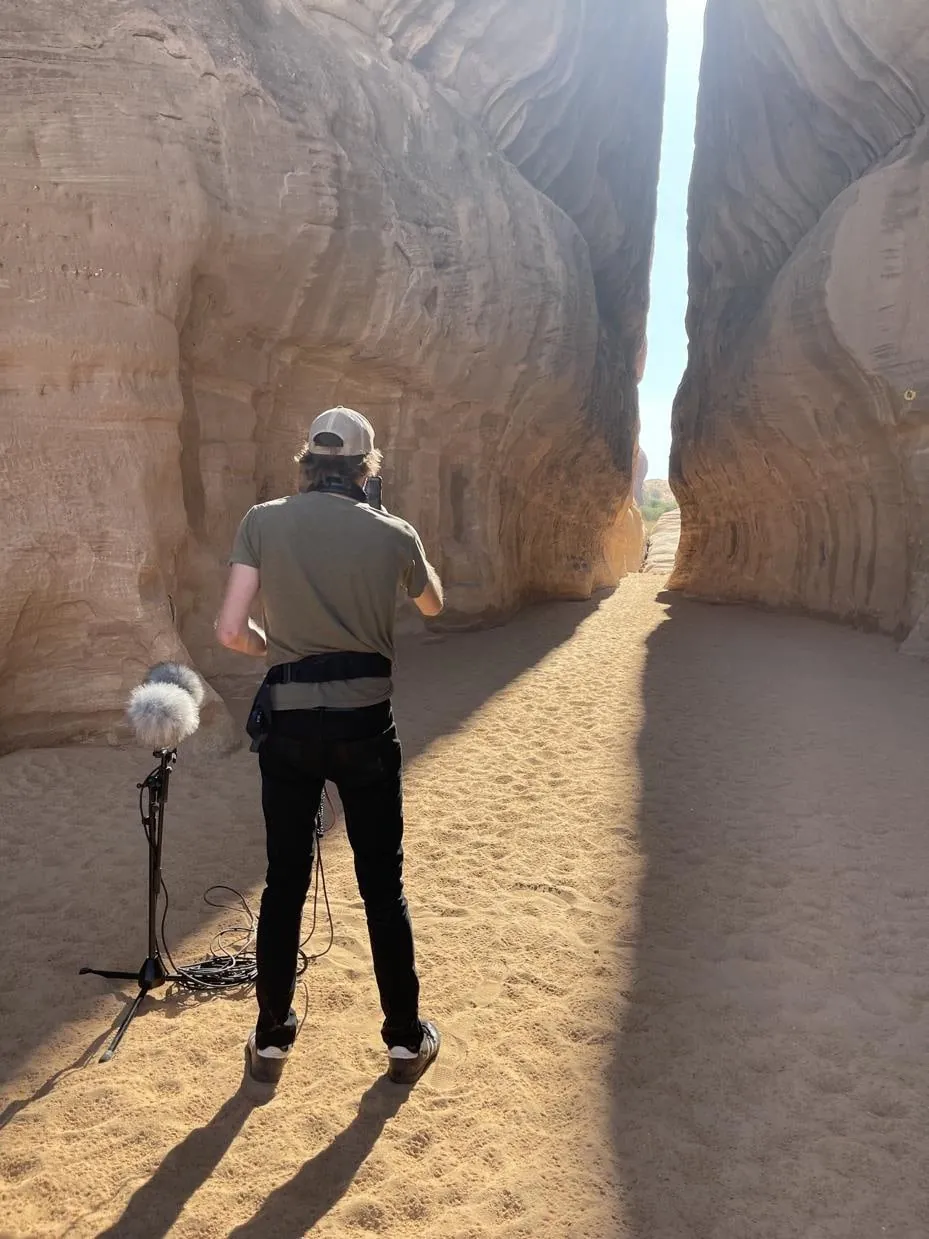
It's why audio has become such a powerful format for destinations. A podcast isn't a two-second scroll or a summarized snippet. It's twenty-five minutes of genuine attention, the kind of time in which a story can actually land and a feeling can actually form. In an era when the machines are absorbing the facts, the format that carries feeling is the one worth owning.
The destinations that thrive from here won't be the ones who game the new algorithm most cleverly. They'll be the ones who tell their story so richly, and so humanly, that the algorithm stops being the point. Let AI have the logistics. The feeling was always the part that mattered, and it's the one part a search engine can never take from you.
Armchair Productions makes award-winning audio for the travel industry: stories that put travelers inside a destination long before they book. If you're thinking about what your destination truly owns, we'd love to talk.